
By Glow Health | Menopause & Sexual Health Specialists
You may have noticed that your body feels different in your 40s and 50s in ways that go beyond weight or energy. Tasks that used to feel easy feel harder. You tire more quickly. Your arms and legs look different even if your weight hasn't changed dramatically. What you may be experiencing is sarcopenia, the progressive loss of muscle mass and strength that accelerates during the menopausal transition, and it deserves far more attention than it typically gets.
Sarcopenia is not an inevitable consequence of aging that you simply have to accept. It has identifiable causes, meaningful health consequences, and effective interventions. Understanding it is an important part of protecting your strength, independence, and long-term health.
What sarcopenia is
Sarcopenia is defined as the age-related loss of skeletal muscle mass, strength, and function. It begins gradually in a person's 30s and accelerates in the 50s and beyond, but for women the menopausal transition represents a particularly significant inflection point in the rate of muscle loss.
The European Working Group on Sarcopenia in Older People (EWGSOP) defines sarcopenia based on low muscle strength as the primary indicator, with low muscle quantity or quality confirming the diagnosis. In practical terms, this might show up as difficulty rising from a chair, reduced grip strength, slower walking speed, or a general sense of physical fragility that feels premature.
Sarcopenia affects an estimated 10 to 30% of adults over 60, with rates increasing substantially with age. But the process that leads there begins decades earlier, and the menopausal transition is a critical period when intervention can make a significant long-term difference.
Why menopause accelerates muscle loss
Several hormonal changes during perimenopause and menopause directly affect muscle health:
Estrogen. Estrogen has anti-inflammatory properties and supports muscle protein synthesis, the process by which the body builds and repairs muscle tissue. It also plays a role in muscle satellite cell activation, which is central to muscle repair and regeneration. As estrogen declines, muscle protein synthesis slows, recovery from exercise takes longer, and the inflammatory environment in muscle tissue increases.
Testosterone. Women produce testosterone in smaller amounts than men, but it plays an important role in maintaining muscle mass and strength. Testosterone levels decline gradually with age and drop more significantly around menopause. Low testosterone in women is associated with reduced muscle mass, lower energy, and diminished physical performance.
Growth hormone and IGF-1. Both decline with age and the rate of decline accelerates around menopause, further reducing the anabolic signals that support muscle maintenance.
Insulin resistance. As discussed in our post on menopause and weight gain, insulin sensitivity decreases during the menopausal transition. Insulin resistance impairs the body's ability to use amino acids for muscle protein synthesis, contributing to muscle loss even in women who are eating adequate protein.
The result is that women in perimenopause and early postmenopause are losing muscle at a faster rate than their premenopausal selves or their male peers, often without realizing it because the changes can be gradual and may be masked by simultaneous increases in fat mass.
Why it matters
Sarcopenia is not simply a cosmetic or fitness concern. It has substantial implications for long-term health:
Falls and fractures. Muscle strength and balance are the primary defenses against falls. Sarcopenia significantly increases fall risk, and in the context of the bone density losses that also accelerate during menopause, a fall is far more likely to result in a fracture. Hip fracture in older women is associated with significant mortality and loss of independence.
Metabolic health. Skeletal muscle is the body's primary site of glucose disposal. Less muscle mass means less capacity to clear glucose from the bloodstream, worsening insulin resistance and increasing the risk of type 2 diabetes and cardiovascular disease.
Physical function and independence. Muscle strength underlies virtually every physical activity of daily life. Sarcopenia is one of the leading contributors to loss of functional independence in older women, making it a direct determinant of quality of life in the decades ahead.
Mortality. Low muscle mass and strength are independently associated with increased all-cause mortality in older adults, even after accounting for other health conditions.
What actually helps
Resistance training
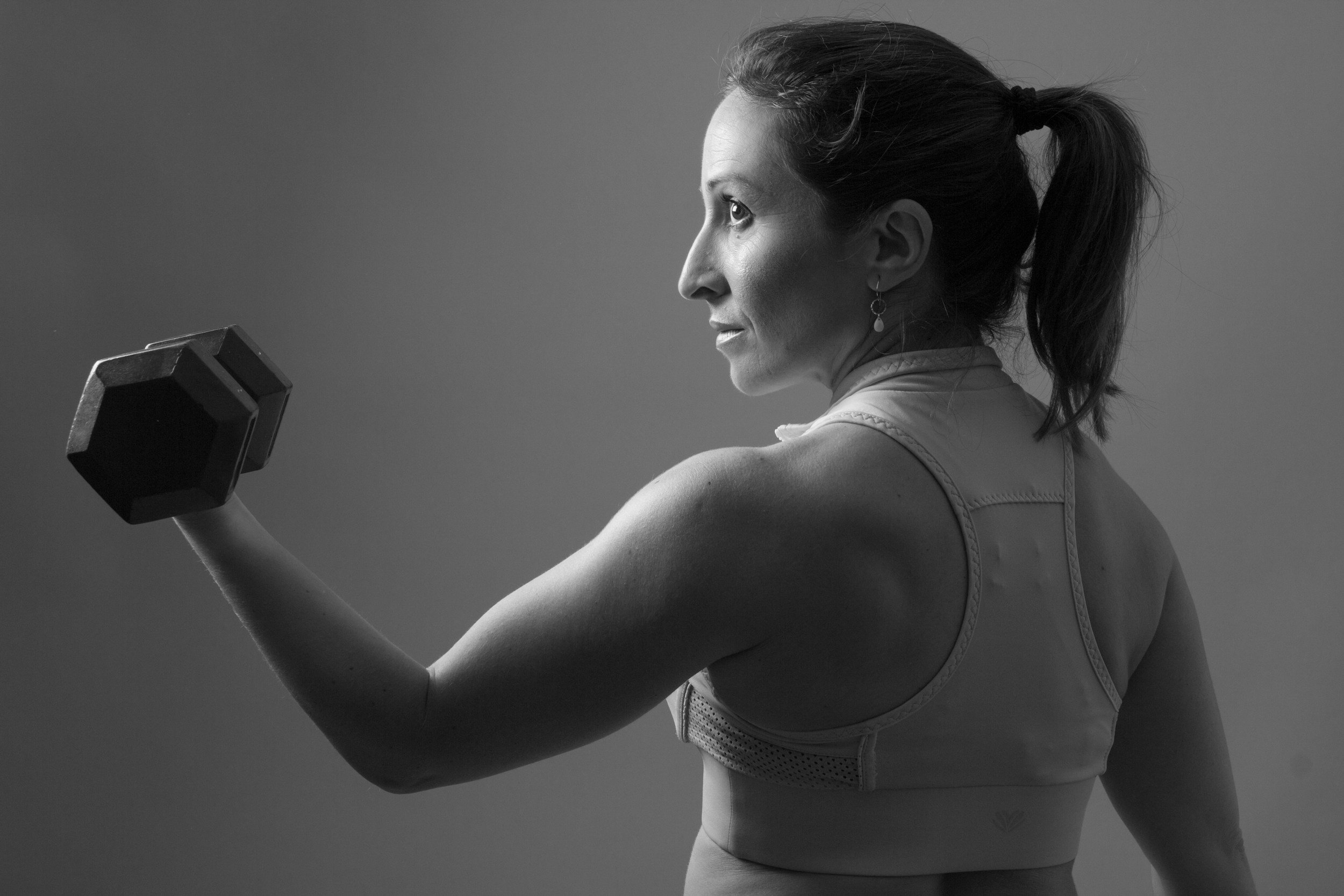
Resistance training is the single most effective intervention for sarcopenia, and it works at any age. Progressive resistance exercise, meaning training that systematically increases in challenge over time, stimulates muscle protein synthesis, activates muscle satellite cells, and drives meaningful improvements in muscle mass and strength even in women who have never trained before.
A 2021 meta-analysis in Ageing Research Reviews found that resistance training produced significant increases in muscle mass and strength in postmenopausal women, with progressive programs showing the greatest benefit. The key word is progressive: walking or gentle exercise, while beneficial for cardiovascular health, does not provide the mechanical stimulus needed to build and maintain muscle. Lifting weights, using resistance bands, or doing bodyweight exercises that genuinely challenge the muscles is what drives adaptation.
Two to three sessions per week targeting all major muscle groups is a reasonable starting point. Working with a trainer who understands the specific needs of midlife women can make a significant difference in both safety and effectiveness.
Protein intake
Muscle protein synthesis requires adequate dietary protein, and the amount needed increases with age. Most midlife women eat far less protein than is optimal for muscle health. Current evidence supports a target of 1.2 to 1.6 grams of protein per kilogram of body weight per day for women in this life stage, which is substantially higher than the general RDA.
Distributing protein intake across meals rather than concentrating it in one sitting appears to optimize muscle protein synthesis throughout the day. Leucine-rich protein sources, including animal proteins, dairy, and legumes, are particularly effective at stimulating muscle building pathways.
Hormone therapy
Estrogen therapy has been shown to slow the rate of muscle loss during the menopausal transition and to improve muscle quality. A systematic review published in Climacteric found that hormone therapy was associated with preservation of lean mass and improvements in muscle strength in postmenopausal women, with benefits beyond what exercise alone provides in some studies.
Testosterone is increasingly recognized as an important component of muscle health in women. While there is no FDA-approved testosterone preparation specifically for women in the United States, compounded transdermal testosterone is used clinically and has evidence supporting benefits for muscle mass, strength, and physical performance. This is an area where individualized discussion with a knowledgeable clinician is valuable.
Creatine supplementation
Creatine monohydrate is one of the most well-researched supplements in existence and has a particularly strong evidence base for supporting muscle mass and strength in older adults. A 2021 meta-analysis found that creatine supplementation combined with resistance training produced significantly greater gains in lean mass and strength than resistance training alone in older women. It is inexpensive, widely available, and has an excellent safety profile. A dose of 3 to 5 grams per day is standard.
Vitamin D
Vitamin D receptors are present in muscle tissue, and deficiency is associated with reduced muscle strength and increased fall risk. Adequate vitamin D is important for muscle health as well as bone health, and many midlife women are deficient. Correcting deficiency through supplementation is a simple and important step.
Starting sooner rather than later
Like bone density, muscle mass is easier to preserve than to rebuild. The earlier in the menopausal transition a woman begins addressing sarcopenia, the more muscle she has to work with and the more responsive her body is to the interventions that help. This is not a problem to address in your 70s after significant loss has already occurred. It is a problem to get ahead of in your 40s and 50s while the window for meaningful prevention is still wide open.
How Glow Health can help
At Glow Health, we discuss muscle health as part of a comprehensive approach to the menopausal transition. We evaluate hormonal contributors to sarcopenia, discuss the role of testosterone and estrogen in muscle maintenance, and work with women to build an individualized plan that addresses the underlying drivers.
If you've noticed changes in your strength, your physical resilience, or your body composition that feel connected to this life stage, that conversation is worth having sooner rather than later.
Keywords: sarcopenia menopause, muscle loss menopause, menopause and muscle mass, how to prevent sarcopenia, estrogen and muscle, testosterone women muscle, resistance training menopause, menopause body composition
This post is for informational purposes only and does not constitute medical advice. Please consult a qualified healthcare clinician for personalized guidance.
